Mixed Up Tapes
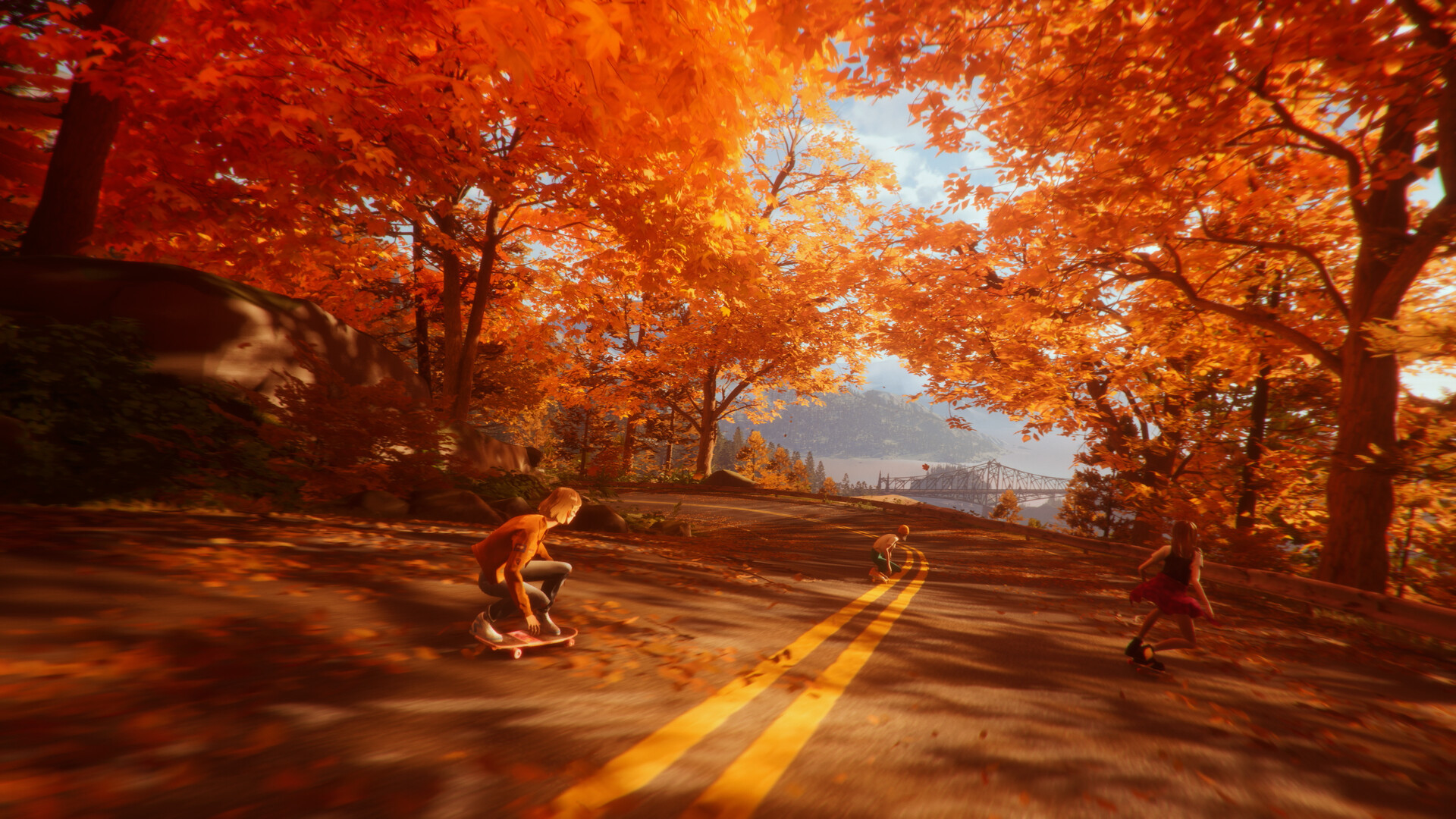
Mixtape, the second game effort from local Australian studio Beethoven & Dinosaur, is a vibe to play. Not my favourite game, but I can see that they were going for. Floating and grinding through its nostalgia infused vignettes feels great; and there’s a kinetic, infectious energy to it.
But as a first-generation Black Australian playing a game developed in my own backyard, engaging with its crafted nostalgia gives me a cultural whiplash. I did enjoy my short time playing it, and I notice some nods to our culture at times (I peep the Rage Tee), but I find myself wrestling with the reflection in its rearview mirror. Why is a team that goes as far as to say "America is as real to us, as Middle-earth", making a story in the country that it didn't grow up in, and why isn't it creating something that like that for us? These are just my thoughts, but it's kinda of a shame that they didn't go balls to the wall on something uniquely Australian.
I’ve seen other, far better reviewers than I, note that it's touchstones feel slightly dated for its late-90s to early-00s setting. From a localized perspective, however, that temporal lag is actually kinda accurate. Growing up in Australia, we were always lagging behind the US. All types of media from the States took months, sometimes years, to permeate our country. What was old news over there was still fresh across the oceans.
Going through the tracklist they chose for the game, shows me a very... white curatorial choice by the developers. In its pursuit of a curated, John Hughes-esque Americana, it strips away a lot of the black fingerprints that actually dominated the era, especially over here.
Looking at the 1999 ARIA charts (which are basically Australia's Billboard) shows that while the typical pop genres were there, R&B like TLC, Lauryn Hill and Monica were also a big part of it.
Black music was always being played on the radio here, and erasing it to serve a specific, indie-rock daydream feels wrong to me. For myself, seeing black people thrive in music, was like one of the only things I could point out to others and say, "Hey, they look like me!", in a very white Australia.
Wrestling with the curatorial choices made in Mixtape, also means wrestling with the very idea of America; that the game, and by extension, our localised culture, so lovingly romanticizes. As Australian kids, we were practically indoctrinated to view the United States as the mecca of art and culture. We imported their dreams wholesale. But for a lot of us, that pristine American mythos died in the spring of 2001.
The morning of September 12th is burned into my memory. I remember being a child, and crying, because the TV stations had abruptly pulled all children’s programming for rolling news coverage.
What I recognise now and from the conversations with my parents over the years, was the fear in my parents in that room. They were glued to the television, watching the towers fall, paralysed by a silent, highly specific terror.
They weren't just horrified by the tragedy; as Afro-Latin and Arab immigrants, they knew the empire's crosshairs would inevitably pivot to people who looked and prayed like them. And pivot they did. The ensuing Islamophobia in Australia became so systemic that my parents made the decision to legally change their names.
A Muslim-sounding name on a resume meant an automatic "no" before you even reached the interview stage. They had to strip away pieces of their own heritage just to survive the systemic bias, begging for the dignity of a paycheck in a country that proudly touted multiculturalism while violently enforcing assimilation. Do you know how often people we met thought I was adopted, because our surnames weren’t the same anymore? It was alienating.
That subservience is the crux of my discomfort. Australia has always been an uncritical player-two to the US, a dynamic fueled heavily by our own Tall Poppy Syndrome. We cut down our homegrown talent so quickly that we inherently devalue our own culture- just look at the ARIA charts today, it's a sea of American artists with barely a few Aussies gasping for air. We don't only import their media; we also import their geopolitics. Decades later, while Trump is pushing his illegal, aggressive posturing on Iran, Australia was the first nation to blindly throw its hands up in support. We weren’t even pressured to do it. We just instinctively fell in line, eager to please the empire whose culture we consume so voraciously.
Ultimately, Mixtape succeeds at what it sets out to do. As an interactive piece of media, it's a fun, emotionally resonant tribute to the reckless abandon of youth, and I caught myself smiling through much of it. But as I played, navigating teenage milestones to a soundtrack of imported American rock, I couldn’t shake the alienation. It’s a love letter to an Americanized adolescence we all wanted to emulate, masking the heavier, darker reality of what it actually meant to grow up in that cultural shadow.
The nostalgia it sells is a borrowed dream, and for families like mine, buying into it came with a price.