

Sprite
NOW PLAYING: Oldale Town - Pokemon Anime Soundtrack
VOL
This piece is meant to be a sequel to my other one, but it's not required!~
Enjoy!
Guide

New in Town

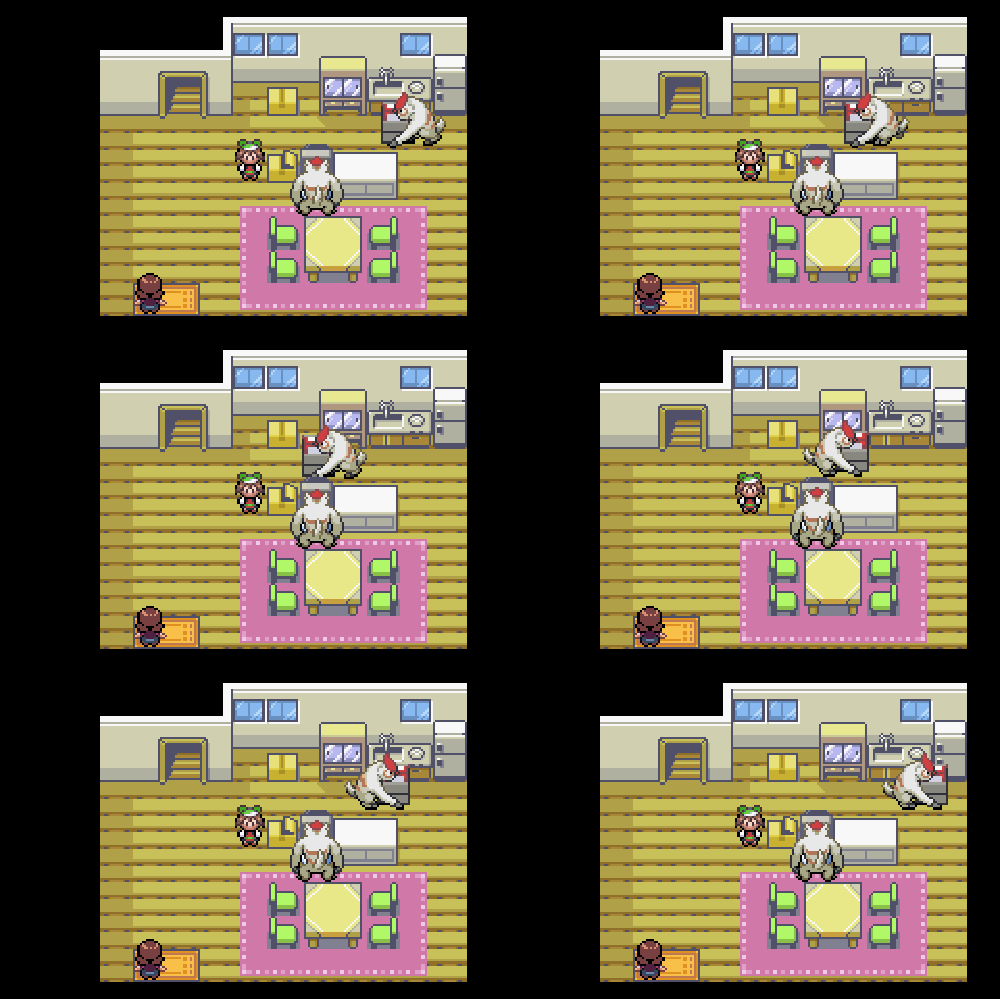
player in house after moving in, as machoke run around setting things up.

I’m sure this was expected (not like I was hinting at it in my last one), so let’s begin. The GBA was a different beast to the Game Boy Color, and Game Freak used that upgraded hardware to build a fundamentally different world to the ones before. When you look at the specs, the change to 32-bit meant the developers finally had the power to make environments with actual verticality, and complex weather systems. Gen 1 and 2 were built on flat, single-layer grids where the developers had to use visual tricks to fake any sense of elevation (which was incredible), but Gen 3 introduced a multi-tiered world where you could walk under bridges, and see your character’s reflection fully rendered in puddles on the ground. It allowed Game Freak to add a cohesive, interconnected ecosystem to it’s already living worlds.


The layout of Hoenn is a recreation of Japan’s Kyushu island, and the development team went to insane lengths to adapt the real-world topography into their game. Junichi Masuda and the team took the actual map of Kyushu and rotated it ninety degrees counterclockwise. I remember when people used to spread rumors on old forums convinced that the developers rotated the map because of cartridge memory limitations or because they wanted to hide the real-world inspiration from western players, when no, the reality is that it’s strictly tied to game design and hardware formatting. Masuda rotated the island to fit the layout of the Game Boy Advance’s horizontal screen and to balance the ratio of landmass to the massive ocean routes they planned to add. They mapped the real-world Mount Aso directly into the game as Mount Chimney, and the famous hot springs of Beppu heavily dictated the look of Lavaridge Town. Instead of adding the time of day changes like Johto, they added specific, coordinate-based weather systems that altered the environment depending on exactly where you were on that map.


I’m bringing up this hyper-specific geographical permanence because my own real-world instability was really starting to take it’s toll on me during the years I spent playing these games. My family was dealing with severe housing instability, which meant we were constantly moving from place to place without any warning; and as you know I was also an undiagnosed autistic kid with ADHD, and my brain required a level of routine and order that my physical environment completely lacked. The chaotic, unpredictable nature of my daily life made the rigid but ever-changing structure of Hoenn incredibly important to my psychological well-being. I used the absolute predictability of the game's map to learn my geography because the rules of this digital environment never changed on me. The routes connecting Rustboro City to Verdanturf Town were hardcoded, and the specific spawn rates of the Pokémon within those routes operated on a reliable logic.


This meticulously designed game kinda functioned as my permanent residence and my actual roots. Game Freak’s obsession with spatial relations in Generation 3 forced me to thoroughly understand the terrain I was in. The map design requires you to backtrack and re-engage with previous areas using new HMs, which naturally builds a geographic familiarity with the region. I of course, memorized the exact step counts between towns and the specific layouts of the cave systems because having a predictable space to navigate gave me total comfort. I’m sure it’s also the reason for me being very good at mapping places out in my head nowadays too.


Hoenn also provided a highly structured framework that literally taught me how to socialize and find a community as I was starting to get older. The Secret Bases allowed me to claim a permanent place and decorate it however I wanted in a completely secure environment. I think people have forgotten that mixing records was a thing. Via the link cable, you could mix records with other people, and it caused their secret bases to permanently fill my save. Having the physical representations of other kids show up in my predictable world gave me a safe, low-stakes way to practice interacting with people. I learned how to build friendships by trading Pokémon and sharing these customized spaces within the safety of the game's strict parameters, and provided the exact anchors I needed to survive my childhood, and the brilliant architectural design of Hoenn is the direct reason I was able to find any genuine happiness during that time.
Poké-naving the Region

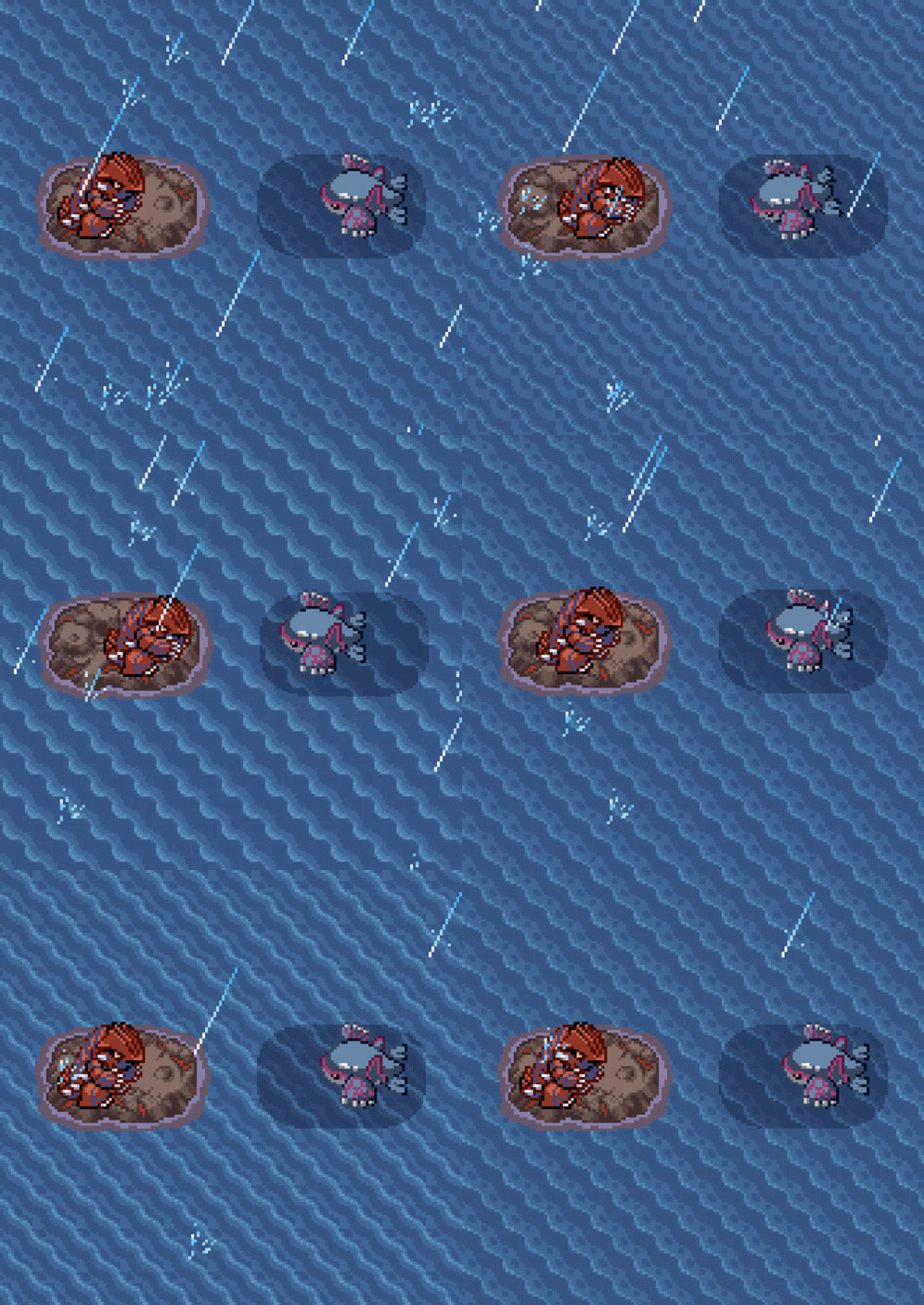
the two kids clashing

GameFreak built a physical ecosystem where the game explicitly forces the environment to interact with the player. They also added some dynamic, permanent weather systems that push the console to its absolute limits through aggressive use of hardware layers and graphical interrupts. When you walk onto Route 119 and the game starts dumping heavy rain, or you hit the choking sandstorms on Route 111, the engine is actually manipulating background tile layers and sprite transparency in real time to simulate atmospheric density. They even engineered a persistent ash fall on Route 113 that accumulates on the grass tiles and actively tracks your precise footsteps to mathematically clear the soot away as you walk, and I think that’s so damn cool. These overworld environmental states are added directly into the battle engine so the weather seamlessly overrides the standard battle systems. The pouring rain instantly boosts Water-type damage and skips the accuracy check for Thunder, while the heavy sunlight changes the timing for solar based attacks. The ecosystem dictates the encounter tables, meaning you only find species like Lotad thriving in those permanent monsoon zones.


The Dev team put the entire philosophical foundation of Generation 3 in extreme environmentalism and the friction between human progress and natural stagnation. Junichi Masuda and the designers grew up understanding Japan's volatile relationship with its own geography (in particular the Land Reclamation Project), and they added Team Aqua and Team Magma as radical ecological factions trying to artificially force the balance of nature in opposite directions. The conflict centers heavily on expanding landmass for human development versus expanding the oceans to return the planet to a primordial state. They designed Kyogre, Groudon, and Rayquaza to represent the unstoppable scale of nature automatically correcting itself when those ecosystems are pushed too far. The game forces you to deal with massive, region-wide droughts and/or catastrophic flooding that literally change the map and background music to reflect the sheer panic. These legendary Pokémon operate as raw environmental resets punishing humans for fucking around with ecosystems they completely misunderstand.


This rigid, unyielding cause-and-effect ecosystem gave my brain exactly what it needed while I was permanently starved for any kind of predictable structure in my real life; my living situation could change overnight without any logical explanation, but Hoenn moved on a predictability that I could completely trust. The interconnected systems of Generation 3 really did provide a flawlessly reliable environment where specific conditions guaranteed specific outcomes. If I walked into the rain on Route 119, the weather would always boost my Water attacks, and if I ran through the volcanic ash, the game rewarded my pacing with usable items. I know it sounds weird, but I used this intense, systemic consistency to self-regulate because the game's logic never lied to me and never suddenly changed the rules.


During the Game Boy Color era, the link cable mostly functioned to temporarily connect two instanced game states for a trade or a battle before immediately severing the connection. When Game Freak developed Record Mixing for Ruby and Sapphire, they made a system where the Game Boy Advance actually executed bidirectional memory block swapping, so basically if you plugged into a friend's console and mixed records, the hardware permanently overwrote specific hex addresses in your save file with their raw game data. The game directly imported their exact Secret Base coordinates, their custom furniture layout, and their current Pokémon party into your single-player map as an entirely functional NPC you could battle every single day. They were basically using asynchronous multiplayer a full decade before Nintendo ran with the concept for the 3DS StreetPass system (which I miss every day).


The ability to carve out a customized space and physically network it with other players meant so damn much to me. I never actually had a permanent bedroom to decorate or a space that felt permanent. Making a base and arranging my traps, desks, and plushies gave me an actual, permanent address that nobody could take away from me. I mapped out the exact layout of my secret base and knew precisely where everything belonged, and it was great.

Balanced.

The physical geography of Hoenn and the dynamic weather systems operating on top of that effectively sold the illusion of a living, breathing ecosystem for me. Game Freak used the environmental clash between the expanding oceans and the changing landmasses to prove that a functioning world still requires balance. The hardware allowed them to physically manifest this philosophy through weather that altered the exact parameters of the world based entirely on your location in-game. When Team Magma/Aqua completely disrupted that balance by awakening Groudon or Kyogre, the environment punished you by altering the entire region with catastrophic, blinding droughts or massive floods that broke the normal, predictable rules of the map.


Looking back on all of this as an adult, I really get why I latched onto this game to survive my late childhood. When you’re dealing with severe housing instability, the real world is really unpredictable and entirely out of your control. My actual physical environment was a chaotic fucking mess where rules constantly changed without warning and I had no permanent space to call my own. It did fortunately stop, and I was able to set roots in my teen years; but by mastering the complex, entirely predictable systems of these games, I got a sense of control back. I memorized that layout of the Hoenn map to hell and back.


I used this massive interconnected world to to make me feel safe. The mechanics of secret bases and link cables really did hand me a script to decode human interaction and initiate conversations with other kids who were engaging on the same wavelength as I was. It also gave me the explicit instructions I needed to navigate a terrifying reality, and allowed me to finally figure out how to make friends and start to find some actual happiness in my life, and I’ll forever be thankful to it.

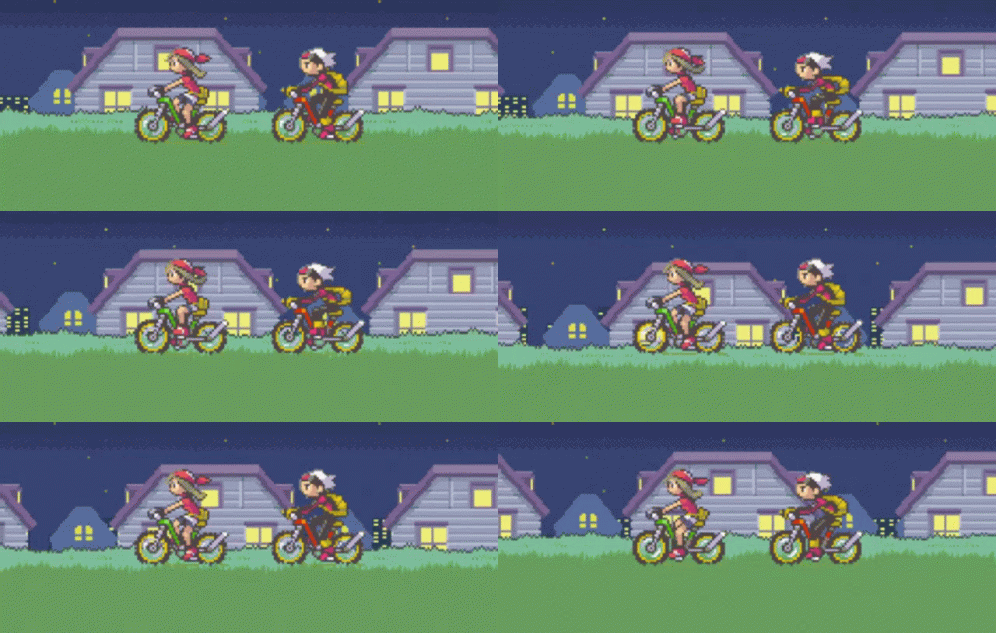
the two trainers biking home