Curving the Clock
I don’t know why I get genuinely pissed off when I see modern video game essays tearing into Pokemon Gold and Silver for the "bad level curve." (Spoiler: I do know why) You’ve heard it a thousand times. "The mid-game is a slog," or "Why are the wild Pokemon on Route 44 only level 24?" It drives me up the fucking wall because these people are approaching a twenty-five-year-old game for children with the brain-rot efficiency mindset of a modern speedrunner, two decades removed. They’re judging a slow-burn RPG by the standards of a dopamine-fried content cycle. You’re trying to binge-watch a season of television that was designed to be aired once a week.
See, the design of Gen 2 wasn't made for you to crush the Elite Four in a single weekend, it’s built around one of the coolest pieces of hardware at the time; the Real Time Clock. That internal battery wasn't just a gimmick to make Espeon or Umbreon evolve; it was also the entire underlying point of the game itself. The game wanted you to play for forty-five minutes, realize you couldn't catch a Lapras until Friday, and turn the damn thing off. It forced you to align your life with the game’s life. The pacing feels "slow" because it’s supposed to be a daily thing, like brewing coffee or walking the dog, not some rush to the credits. If you’re grinding low-level Gravelers and miserable, that’s on you for not respecting the clock.
And god, looking at Johto now, you can see how much love went into making that world worth the wait. While Kanto was this vague, industrialized approximation of the Tokyo metro area; Johto was unapologetically Kansai. Shit was rustic and traditional in it’s ways. When you walk into Ecruteak City, you aren't just in some generic ghost type town; you’re literally in Kyoto. The focus changes from the cold science of Silph Co. to the wooden pagodas and the changing leaves. It feels grounded in a way the series hasn't really managed much since. Game Freak was flexing their design muscles, and leaning into the history of their own country, creating a map that felt like a place people actually lived in, rather than just a series of obstacle courses for a child.
I think the reason I get so defensive about this Generation, and about this specific iteration of the world, is because for a long time, it was the only place I actually felt like I lived.
When Gold and Silver came out, my real life was a fucking disaster. My struggling parents were in this loop of unstable housing, bouncing between rental to rental. I didn't have a bedroom, or a consistent school. And I definitely didn't have a diagnosis for the Autism and ADHD that were currently making my brain feel like it was shaking at a frequency that shattered glass. Everything was either too loud, too bright, and completely nonsensical. I couldn't understand why people said things they didn't mean, or why I couldn't sit still, or why the texture of certain foods made me want to rip my skin off.
I was just this confused, overwhelmed little kid, and that game was my best friend. I don't mean that in the cute, sentimental way; I mean it literally. It was the consistent variable in my life. Even when I wasn't playing, I knew that time was passing in Johto exactly the same way it was passing for me. If it was night time in the scary new bedroom I was sleeping in, it was night time for my Totodile. It made me feel less lonely, and it created a parallel existence where the rules were strict, and I had total control.
I actually taught myself to read because of it. I was struggling hard in school, and the teachers had written me off as slow or difficult, or were just racist to me as the only black kid in the school system at the time. But I needed to know what Professor Elm was saying, I needed to understand what the fuck "encyclopedia" meant so I could fill the Pokedex. I sat there with that screen, sounding out the text boxes phonetically, desperate to understand the mechanics of this world because the real world was failing me. I didn't care about the level curve being a grind, I needed that grind, and I needed the repetition. I needed a world that waited for me, every single day, without fail.
Everything's Changed

When you finally beat Lance and get that ticket for the S.S. Aqua, the game sells it to you as this triumphant homecoming, you’re going back to where it all started! But as soon as you step off the boat in Vermilion City, something feels off. If Johto was the traditional walk through the Japanese countryside, Gen 2’s Kanto feels like the suburbs after a massive corporate buyout. It’s been completely hollowed out; It’s the gaming equivalent of visiting your childhood playground and realizing they tore down the dangerous metal slide to put up safe, rubberized mulch and a smoothie place. It’s an interesting lesson in melancholy and the harsh reality of gentrification within a game world.
The saddest example of this, and I mean, this is actually fucked up when you stop to think about it, is Lavender Town. In the first game, the Pokemon Tower was a massive, seven-story vertical graveyard. It was a place of mourning, spiritualism, and genuine creepiness. In Gold and Silver, it’s been demolished. And what did they build on top of the literal graves of beloved friends? A Radio Tower, an actual corporate broadcasting station. It is arguably the bleakest shit in the entire franchise. It sends a message, whether intentional or not, that tradition and reverence are dead, buried under the need for modernization and capitalism. And it’s not just there. Cinnabar Island, once a hub of science, has been obliterated by a volcanic eruption, leaving nothing but a Pokemon Center. The world moved on.
Now, I know the technical reason for this. It’s a technical miracle that Kanto exists at all. That technical limitation accidentally created a cool narrative. The emptiness of Kanto doesn't feel lazy to me; but like the erosion of memory. Kinda like going back to your hometown and realizing it’s smaller and sadder than you remembered.
This hit me so hard as I grew and replayed it because, like I said, we were moving constantly. I didn't have a home to go back to, but on the rare occasions we’d drive past an old apartment complex or a house we used to rent, I’d get this visceral, panic-inducing tightness in my chest. I’d see that the new tenants had painted the fence a different colour, or cut down the tree I used to climb. It felt like a violation. It’s that specific, autistic horror of change, where even the physical anchors of my memory weren’t permanent. I wanted the world to stay frozen so I could understand it, but the world refused to cooperate. Gen 2 Kanto captured that exact feeling for me. It was familiar ground, but the soul had been ripped out of it.
Yet, strangely enough, playing through that hollowed-out Kanto was therapeutic. It was my "best friend" validating my anxiety; like the game was admitting, "Yeah, things change. Cinnabar blew up. The graves are gone. It sucks, doesn't it?" It didn't try to sugarcoat the passage of time. It let me walk through the ruins of the first game and conquer them anyway. It was a safe space to process the fact that you can’t ever really go home again; or if you do, you have to accept that it’s going to be different. It was the most honest thing a video game had ever said to me. The clock ticks, the world changes, and you just have to keep going. You’ll find your roots.
Ring Ring!
Let’s talk about the elephant in the room, or rather, the under-leveled Piloswine in the room. If you go on any Pokemon-adjacent area of the web right now, you’ll see people absolutely trashing the "broken" level curve of Gen 2. They talk about how you hit the seventh gym and the wild Pokemon are still level 24. They’ll whine that there’s nowhere to grind for the Elite Four. And look, if you’re trying to blitz this game like it’s a modern speedrun or a disposable weekend distraction, they’re right. That sucks for rushing. But you aren’t supposed to rush this. Calling the level curve "bad" is missing the entire point of the design.
We take the real-time clock feature for granted now, but sticking a battery inside a Game Boy Color cartridge to track time even when the system was off was black magic, even in 2000. The game wasn't designed for binge culture because it wasn’t that type of game. You weren't supposed to grind wild encounters for three hours straight. You were supposed to realize it was Tuesday, which meant the Bug Catching Contest was on at the National Park. Or it was Friday, so you had to go down into Union Cave to find that lone Lapras. Or you had to track down those weird siblings to get your daily power-up item.
The "bad" level curve forces you to engage with these systems. You can't just brute-force your way through with a starter you power-leveled on Route 45. You have to breed. You have to backtrack. You have to wait. The game demanded patience in a way that felt almost disrespectful to a kid who just wanted to see the ending, but for me? That demand for patience was the only thing holding me together.
I’ve talked about the chaos of my housing situation, but let’s add the neurodivergence on top of that. Being undiagnosed AuDHD is a paradox. The ADHD side of my brain is a chaotic engine that refuses to build internal structure; I can't plan five minutes ahead to save my life. But the Autistic side craves routine. It needs to know exactly what is going to happen, when it’s going to happen, and that it will happen the same way every time. When you’re a kid moving between houses, and changing schools, you have zero routine and no control. My life was a series of random events happening to me.
Which is why the PokeGear was the only calendar that mattered to me. I didn't know if I’d be in the same zip code next week, but I knew that in Johto, next Tuesday was Bug Catching day. I knew the sun would go down at 6:00 PM. I knew the morning sun would hit at 4:00 AM. The game provided the rigid, external structure that my parents couldn't provide and my own brain couldn't manufacture. No matter how much the real world changed, the internal logic of Gold and Silver was ironclad.
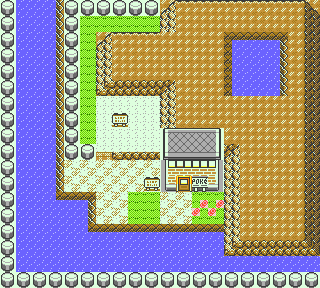
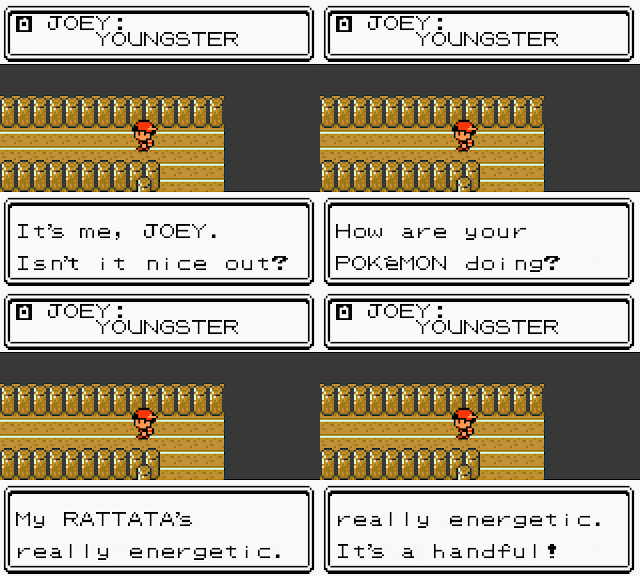
And then there was the phone. I know people hate the phone calls in this game. But try to view it through the lens of a lonely, isolated kid in a new town where she doesn't know a single soul. I’d be sitting in a room that smelled like someone else’s cigarettes, and suddenly- ring ring! Someone was calling me!
It didn't matter that it was just code. It didn't matter that they were NPCs with three lines of dialogue, it was an interruption that acknowledged my existence. It made the world feel lived-in and responsive, and I was a person that other people in this world thought about. As a kid who often felt invisible in the uncertainty of the real world, having a pocket device that literally buzzed with social connection, regardless of fake it was, make me so happy. I initially played Gen 2 to beat it, but I kept playing it to have a schedule, a home, and people who actually wanted to talk to me.
The Silent King on the Mountain
Okay, guess we gotta talk about the end, no? Let me gush a bit. To this day, twenty-five years later, I maintain that walking up to that peak and seeing the protagonist from the first game standing there is the coolest narrative flex in video game history, with the the rule of cool applied fully. Just a kid in a hat standing in the snow. And when you press A?
" . . . "
That’s it. Three dots. And then bro throws a Level 81 Pikachu at your face and the battle music kicks in. Yes, my nostalgia goggles are firmly in right now, and I do not care. It is absolute perfection. It’s the game respecting your intelligence enough to know that you don't need an explanation. You know who he is, and he knows who you are. He was just the best, and he proved it by kicking your ass. It was pure communication through action. It remains one of the most hype moments I have ever experienced.
And can I take a second to just talk about the aesthetics? Because that cartridge was the peak of pixel art. Not the washed out 3D models we got now, but the gritty, limited-palette genius of the Game Boy Color. When Crystal introduced moving animations at the start of battle, that shit felt like actual sorcery to me. Seeing a Suicune’s ribbons blow in the wind or a Totodile do a little jig made the world feel alive in a way that 4K graphics still struggle to replicate because it required your imagination to fill in the gaps.
Then there's the music. Go Ichinose and Junichi Masuda squeezed actual human emotion out of it. The National Park theme sounds like a Sunday afternoon feels. Or the Ecruteak City theme, which manages to sound ancient and spiritual.
Look, I know, I know. I’m looking at this through the thickest pair of nostalgia goggles you can buy. But it’s not just nostalgia, it’s also gratitude.
I think back to that kid I was, I was lonely, scared, and I had no control over my life. But in Johto, I had a world that let me take my time. I had a game that taught me that even if the world changes, even if your home isn't the same as you left it, even if things get destroyed and people leave; you can still go back. You can still face the ghosts of the past and win.
I know I said that these are just games for kids, but they also sat with me in the backseat of a car packed with all my worldly possessions and gave me the reassurance that it was okay, and that’s why it’s the greatest of all time. Not because of the mechanics, but because it was a damn good friend when I really fucking needed one.