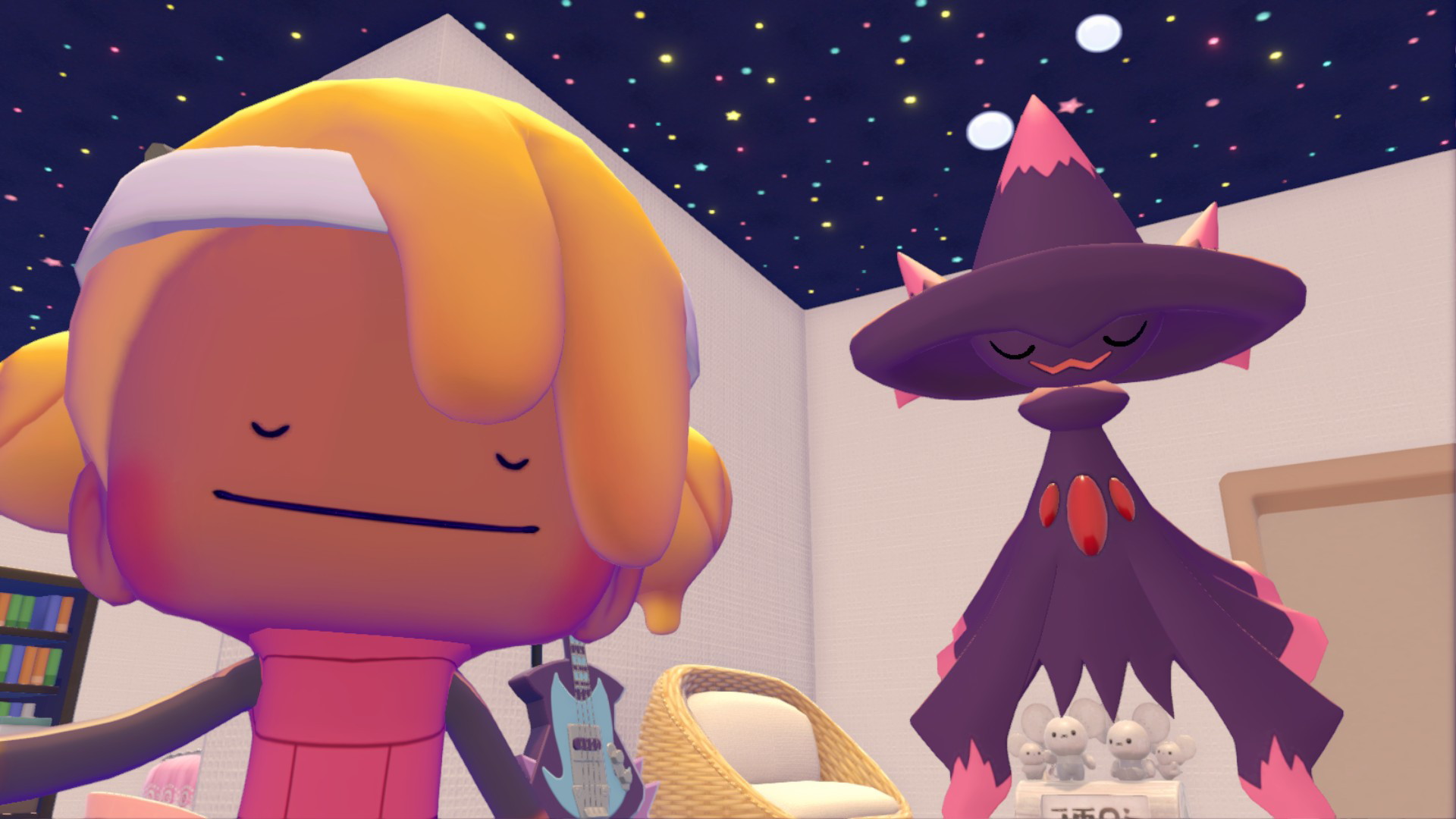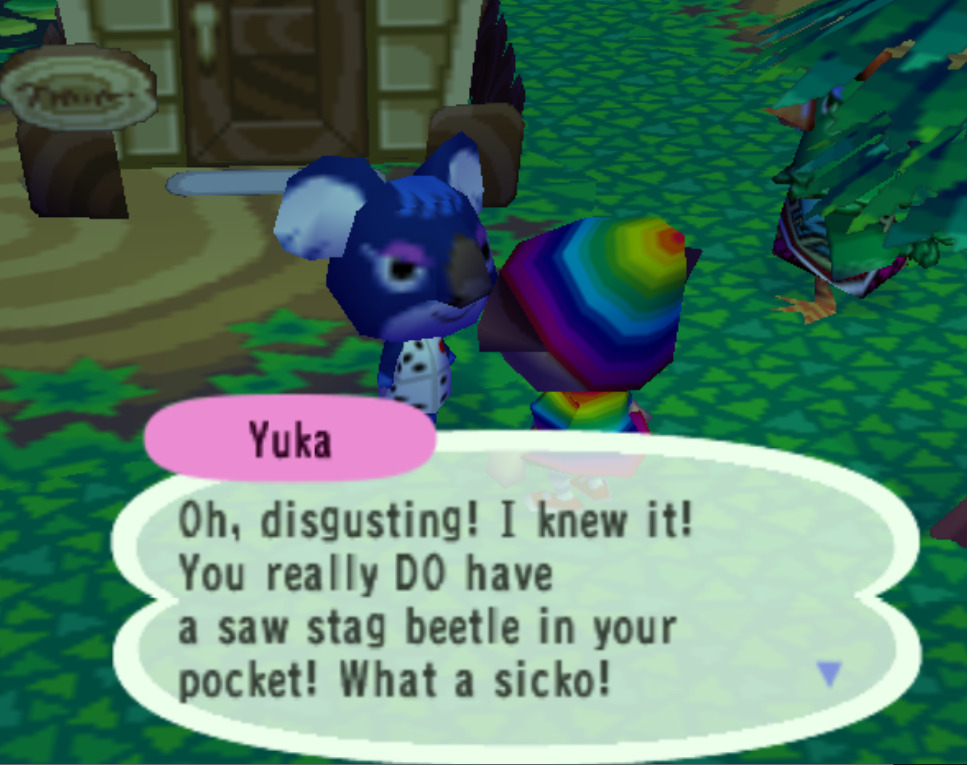
My dear Mom,
I want to go back home.
It'd be an understatement if I said I loved the places I went to. If you haven't noticed from my older messages to you, I was a really lonely kid, and moving around a lot didn't help much with that. I miss being in that old town I arrived to by train in 2002... Because it felt like the people were actual people, with actual emotions and feelings. I loved the place.. so damn much.
But I can't let those nostalgia goggles blind me too much. Mom, why couldn't I be allowed to have my skin color unless I just stood around in the summer sun just to trigger a hidden tanning mechanic? If it was winter, I was shit out of luck- I was white... and that ain't right.
It forced me and others like me, to do the most unnecessary shit just to look like ourselves in a space that was supposed to be a relaxing time.
Why didn't Nintendo consider that anyone other than Japanese kids might want to see themselves reflected in the game? That also makes want to point out Nintendo didn't add any skin color customisation until Pokemon X & Y in 2013. If we're talking first party, it was Splatoon in 2015. That is insane.
When Animal Crossing New Horizons launched, the developers finally added a straightforward character creator right from the jump. Finally being able to see my melanin from the moment I started, was a long needed update that fixed a genuinely offensive historical quirk of the franchise. I was so happy when I felt like what I saw was me.
Now, the actual issue I wanna talk about comes when we look at how Nintendo added that philosophy of complete autonomy to every single other system in that same game. In their bid to turn the island into a safe canvas tailored entirely to the whims of the user, the developers scrubbed away every ounce of friction that made the older games feel like they were alive.
You have to think about the implications of existing within a frictionless utopia. A place where the environment can't push back against your actions is just a dead void. Reality has to have some kind of push and pull, right? When a dev removes the digital world's ability to resist the player, the environment degrades into a lifeless vacuum of pure consumption.
David Graeber talks about how we're conditioned to find comfort in regulated, predictable bureaucratic systems because they save us from the unpredictability of human relationships. Being social is just inherently messy and dumb and it requires constant negotiation, whereas a perfect system allows you to avoid the friction of dealing with other people.
The game gives you absolute dominance over your island, turning you into a god who dictates exactly where the rivers flow and where the houses sit. You even have the power to decide if a villager is allowed to move away, despite their wishes. None of the villagers can ever get pissed off at you or do something unpredictable that inconveniences your master plan, because they aren't allowed to.
Living in an actual neighbourhood in the real world is annoying sometimes, but that annoyance is exactly what forms the foundation of community solidarity.
I lived in an apartment a few years ago where the landlord just didn't want to fix the shared washing machines, and that shared frustration forced me to actually talk to my neighbours, and we all eventually found a way to confront them to actually fix it. We bonded because we were mutually reacting to external pressures that we couldn't easily control.
A space only begins to feel real when things happen that you didn't ask for and don't want... and you love it anyway. The absence of that environmental friction in New Horizons creates an experience that mimics the most alienating aspects of modern late-stage capitalism. You're sitting alone in your private, digital real estate, surrounded by algorithmically pleasant sycophants who exist only to validate your aesthetic choices.... and I don't like that.
They did succeed in building a controllable space, but in doing so, completely fucked up any possibility of organic, surprising life taking root there. The sterility is why the unpredictable, yet structured design of Pokémon Pokopia feels like a rejection of those kinds of cozy game mechanics.
Why is everybody agreeing with what I say?
Feeling Confused - Alli
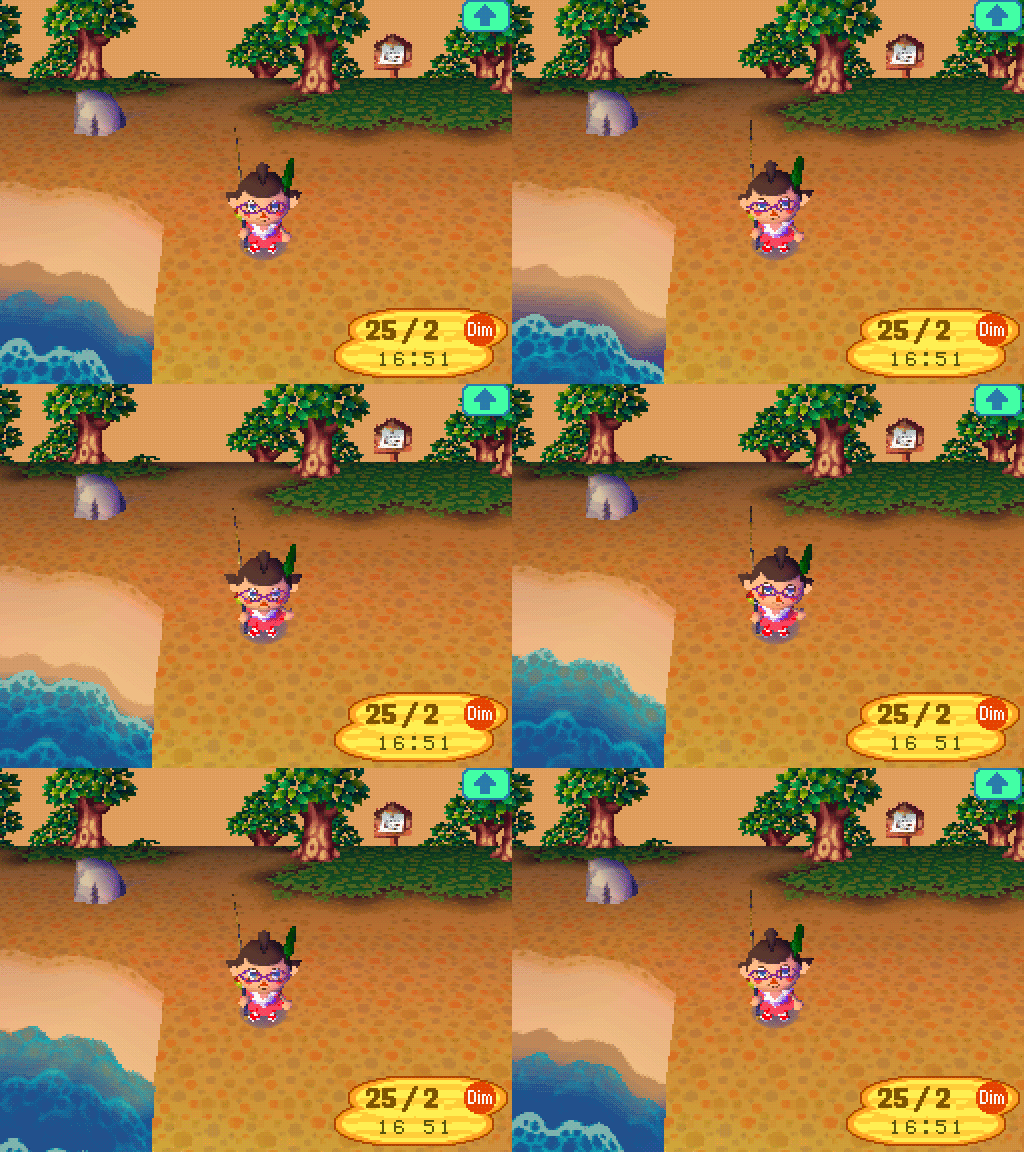
Dear Mom,
Do you remember when I stepped off that train as a broke nobody? I was at the mercy of the town and whatever weirdos happened to already live in the neighborhood. Some of the villagers would insult me or paint my roof an ugly color for no reason. But I also had some friends, like Tank. The people in town would just run away on a whim and start kicking whatever ball decided to be there that day. Today it was a netball.
The villagers can’t get angry anymore, and that’s usually skimmed across as a feature of older Animal Crossing games, but I wanna tell you why it sucks. It just rounds them out. If they get upset, then the times when they are happy mean so much more. Camofrog was a cranky bastard, but when he was nice, it caught me off guard. It was just another side to him that I haven't seen before, like an actual living thing. Resetti retired, when all he really wanted to do was tell the player to save the game. Resetti usually gets the bulk of the hate by fans, but he was completely avoidable if you actually listened to him and saved the game.
New Horizons takes that dynamic and throws it in the garbage by handing you a deserted island and a god complex. Giving the player total control over the environment and the residents adds a sort of rot to the game.
The mechanics train you to perceive your neighbours as disposable props, and it degrades these autonomous digital creatures into mindless lawn ornaments that you can relocate for ten thousand bells whenever they slightly ruin the vibe of your cute orchard.
The new player base that this specific Animal Crossing game catered to, turned the fundamental act of socialization into a commodity exchange where a villager's whole worth was dictated by their market scarcity and their visual adherence to whatever bullshit the player was trying to replicate.
This kind of odd behavior explains what Byung-Chul Han talks about when he analyzes the concept of "the smooth" in the modern world. Contemporary capitalism demands frictionless, perfect surfaces because anything that possesses actual depth or ugliness causes a disruption to our continuous consumption.
Smoothness represents an entirely aesthetic existence completely stripped of any underlying truth or connection to reality. Wealthy people build gated communities to insulate themselves from the poverty they helped create. ACNH players inadvertedly replicated that exclusionary impulse digitally by making impenetrable gated communities to keep out any animal that had an abrasive personality or an ugly character model.
New Horizons offers an escape from that fundamental human responsibility by letting us buy and build our way out of the sometimes messy reality of dealing with other people.
You eventually end up stuck in the loneliness of being an omnipotent god trapped inside a toy house. Deities exist in a state of isolation because everyone around them is structurally forced into a position of absolute subservience. Treating these digital animals as subjects to be commanded and manipulated kills the joy that makes a life simulator function on a basic level. A genuine relationship requires two independent entities reacting to each other with equal agency. You can’t possibly have a meaningful relationship with a piece of code that only reflects your own sanitized choices back at you.
Why isn't Tank talking to me much anymore? Did I do something wrong?
Doubting Myself - Alli
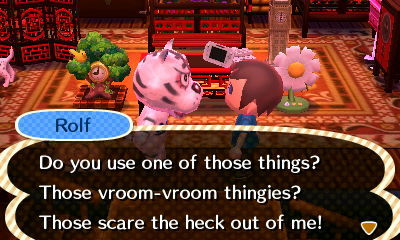
Dear sweet Mom,
Do you know the game, Pokémon Pokopia? I think it solved the problem I was talking about in my last letter. The core premise of this game is that you literally get to play as a Ditto who wakes up in a post-human world, and your main goal is to rebuild viable habitats for all the other displaced Pokémon.
The devs handed us the same lifesim-like tools that made New Horizons so popular. You can place paths, construct buildings, and modify the terrain to your specs... but the fundamental social dynamic totally upends the traditional power structure. You're just a squishy pink blob of goo trying to help out your friends. You possess zero bureaucratic authority and hold no institutional power over anyone else in the town. You're just helping your friends, and they help you in turn. Simple as that.
This lack of authority adds some friction by giving the Pokemon some agency to sometimes fuck up your plans. You might spend two hours working on a beautiful berry orchard, and a Charizard might wander over later that afternoon, fall in love with the place, and ask you to help him live there. This type of friction is healthy and necessary for a life simulator to function properly, at least I think it does. The game actively pushes back against your rigid aesthetic vision. You are forced to engage with the environment on its own unpredictable terms. I was a little annoyed, but when they sincerely thanked me, I didn’t care anymore. I was glad to make it for them. They ran to me and gave me some wood a couple of days later, because they wanted to thank me for helping the town.
A living community naturally involves a huge amount of unpredictability and competing needs that everyone is negotiating constantly. When you don't want a Charizard in your town, you can't just evict him or open up an administrative menu to complain to a higher authority. You just gotta deal with it. Real cooperation always requires a tolerance for inconvenience.
There's a psychological relief in finally surrendering the absolute power that modern cozy sandbox games usually force upon us. Giving up godhood to just become a regular, participating member of an ecosystem changes how you perceive your digital neighbours. You abandon the impulse to view them as aesthetic props, and begin to respect them as autonomous beings with their own valid desires. I think most players have subconsciously noticed that too.
Existing in a state of administrative dominance is fucking exhausting. You're constantly carrying the burden of maintaining perfect order. Relinquishing that control cures the loneliness of the god complex by allowing you to share the world with creatures who actually possess the agency to ruin your day. The digital space feels genuinely alive and communal again precisely because you can’t control the people living in it.
I think I've figured out what's wrong.
Never too far - Alli
My dear Mom,
Now, I don't wanna dunk on New Horizons just because I liked Pokopia more. Honestly, the whole experience just kinda makes me really sad. Playing it feels like an admission of guilt to me, like I'm accepting that the game isn't for me anymore.
It's good to see some evidence that you can hand players creative freedom without totally lobotomizing the social simulation aspect. Seeing those interactive systems function so well together just shows exactly what we missed out on during the last few years of playing Animal Crossing.
You have to look at the absolute tragedy of what Nintendo actually did to their own community. They constructed this big, incredibly beautiful diorama and accidentally trapped an entire new generation of players inside of it. The player base really wanted and expected a lifestyle game that would grow alongside them for years.
I feel like Nintendo purposefully misunderstands how modern communities consume social sims, like these. The developers just packed up their shit and just walked away once the major update cycle finished, only to come back one last time for a Switch 2 update.
I started a new save recently, and experiencing that specific, hollow feeling of walking around a designed island. I watched my perfectly dressed little animal buddies sitting completely blankly on a wooden bench, staring into nothingness, and I just felt totally empty.
Now I'm absolutely going to talk about urban planning. Jacobs argued that over-planned, top-down, completely sterilized urban spaces kill the neighbourhoods they try to replicate. She pointed out that streets need chaos and overlapping, unplanned human uses to actually sustain life. ACNH gave us the digital equivalent of a corporate plaza that looks incredible in a promotional brochure but feels completely dead when you actually try to sit down and exist there.
You also have to consider the moral failure of developer abandonment intersecting with community dependency in modern gaming. Massive corporations create virtual spaces that heavily encourage psychological reliance during a period of intense global isolation. Those same corporations then pull the plug on active development the second the spreadsheets dictate that the initial sales rush is over. They will build a digital neighbourhood that conditions you to depend on it for basic social interaction and then they leave the entire thing to rot as a static museum exhibit.
I... think I've finally reached a point of acceptance regarding closing ACNH for the last time. It kills me, because it's the same place where I first got to present myself as a woman... It's also the same franchise that gave me friends. It might also be that I feel especially salty losing my save to Nintendo, but I feel nothing for New Horizons but sadness.
We have to reckon with the reality that ACNH gave us a beautiful, and inclusive space to be ourselves, while completely forgetting to give us a world worth being ourselves within it. All I can do for now, is hope that the next one learns from these lessons, and wait for a proper Non-AI PC Animal Crossing port release. The toy house is closed for good, and I am ready to just let it gather dust.
Now if you don't mind me, I've got a new roommate, and I want to show her around.
I've packed up, and am finally headed home after so long.
See you soon. - Alli